You don’t have to be rich to have wealth at stake.
We know wealth is more than money. But while money comes with accounts, forecasts and plans, the wealth of your life cannot be captured in a single number. It can still be understood, developed through your choices, and cared for over time.
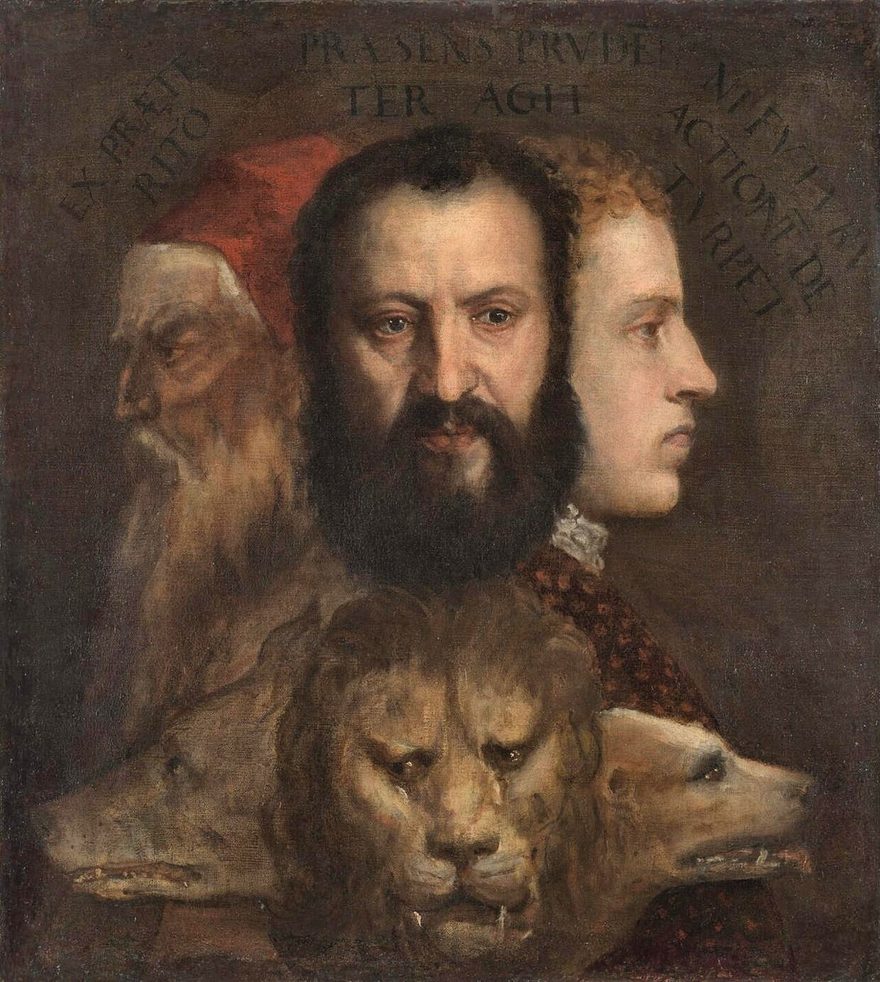
Titian, An Allegory of Prudence, about 1550The National Gallery, London“Learning from Yesterday, Today acts prudently lest by his action he spoil Tomorrow.”The Latin inscription above the heads, in the Gallery’s translation
Format5 live working sessions90 minutes · guided work between sessions · weekly faculty check-ins
WhenJanuary–March 2027Fortnightly · Wednesday or Sunday group · 2 shared assemblies · times for London, New York and Abu Dhabi
GroupUp to 12 participantsSmall, faculty-led learning group
TuitionCHF 1,000Instalments and fellowships available
FacultyRyna MiFounder, The Wealth School · Former private‑banking CEO · Creator of Existential Portfolio Theory
EntryOpen to anyone aged 18 or overComfortable in English · no prior knowledge or minimum financial assets
What would it take to see its different forms together, understand how they influence one another, and recognise how they change throughout your life?
Wealth Across a Life introduces the 9 Life Capitals, a framework for examining the capacities that shape a human life, their relationships and their development over time.
In 5 live working sessions, you’ll examine these relationships in historical and fictional lives, and learn to bring this way of thinking privately to your own.
Is this for you?
Different lives. The same questions of wealth.
You may recognise yourself in one of these situations, or several. Each offers a different starting point for understanding the wealth of your life.
One inquiry, the same evidence for everyone
Everyone works with the same historical and fictional evidence, examining the relationships between different forms of wealth across time.
Your own life remains yours to consider privately.
Beginning an adult life
Choosing what to build first
A degree, a job, a new city, a relationship, a first serious commitment.
Each choice draws on more than money. It also develops capacities you may rely on for decades.
What are you building now, and what might it make possible later?
Carrying many things at once
Work, family and care in the same years
A career, children, parents and your own plans, all sharing the same hours and energy.
These parts of life don’t only compete. They may also sustain, strengthen or change one another.
What supports what? What are you drawing on, and what can be renewed?
Responsible for substantial financial wealth
The fortune, and the life around it
You may know what your assets are worth, how they perform and what they are intended to achieve.
But financial statements cannot tell you everything about the capacities that allow you to hold, use and pass on that wealth, or how those capacities change over time.
What does your financial picture reveal about the wealth of your life, and what does it leave unanswered?
Where would you begin? With the life you’re living, the resources you can use, the wealth of a family, or the relationships between them? Here are educational experiences and tools we recommend, whether or not you study with us.
Select a resource to read it. Our suggested first step is open.
Wealth is worth studying, whatever you already own.
Wealth Across a Life begins with one human life. Through documented and fictional cases, you’ll learn to examine 9 interdependent capacities, how they influence one another, what changes over time and the limits of what the evidence can tell us.
No private-bank relationship or minimum financial assets required.
How these perspectives relate to the course
How is wellbeing today related to the resources available to sustain it tomorrow?
The OECD examines that relationship across societies. Chapter 02 examines the relationships between forms of wealth within one human life, across time.
Some of these approaches examine the deployment of capital. Others explore flourishing, family wealth or the resources that support a life over time.
Selected by Ryna Mi · prices and access as each provider publishes them, checked 8 November 2026; fees, dates and conditions can change · The full collection → The Library · Where to Learn
What changes in one part of a life rarely stays there.
A move to another city may open financial and professional possibilities. It may also change the relationships someone can sustain, the community around them, their energy and the way they spend their time.
Some of these changes may strengthen one another; others may pull against each other. The move alone does not tell us which.
The Wealth School examines a life through 9 Life Capitals: distinct human capacities, shaped by the resources and circumstances available to a person and by their relationships with one another.
The 9 Life Capitals
Select a capital in the drawing to read it.
The 9 Life Capitals, as the School draws them. Time’s central place follows the original drawing and ranks nothing. Definitions are quoted from Existential Portfolio Theory (ExPT), §4, the framework behind the course.
Financial Capital
1 of 9
Definition · ExPT §4The capacity to acquire, preserve, allocate, mobilize, and steward economic resources across time.
Shaped by
Income, savings and assets; the legal and family structures that hold them; the time and attention that stewardship takes.
What sets it apart
Money and assets are what it works with. The capital is the capacity to steward them across time.
Intellectual Capital
2 of 9
Definition · ExPT §4The capacity to acquire, generate, organize, integrate, and apply knowledge, understanding, judgment, and wisdom.
Shaped by
Information and experience; teachers and the people one learns with; time to think.
What sets it apart
It reaches from knowing to judgement and wisdom: how understanding is used, as well as what is known.
Social Capital
3 of 9
Definition · ExPT §4The capacity to create, access, participate in, and benefit from networks, communities, institutions, and collective trust.
Shaped by
The communities and institutions around a person; the rules of access to them; the trust that relationships build.
What sets it apart
It concerns collective life: the networks, communities and institutions a person can enter, take part in and draw on.
Relational Capital
4 of 9
Definition · ExPT §4The capacity to form, sustain, repair, deepen, and wisely navigate meaningful interpersonal relationships.
Shaped by
Time and attention given to others; the emotional capacity to repair trust; differences of power and dependence between people.
What sets it apart
It concerns meaningful relationships between people, and their quality: how they are formed, kept, repaired and deepened.
Emotional Capital
5 of 9
Definition · ExPT §4The capacity to perceive, regulate, express, recover from, and constructively employ emotional experience in oneself and others.
Shaped by
Rest and energy; the relationships in which feeling is expressed and repaired; circumstances that steady or strain.
What sets it apart
It concerns emotional experience, how it is perceived, held and used, in oneself and with others.
Life Force Capital
6 of 9
Definition · ExPT §4The capacity to generate, maintain, restore, and direct vitality, energy, health, resilience, and embodied agency.
Shaped by
The body, sleep and rest; the pace that work and obligations set; care and conditions that support health.
What sets it apart
It concerns vitality in the body: the energy, health and resilience a person can generate, restore and direct.
Creative Capital
7 of 9
Definition · ExPT §4The capacity to imagine, create, innovate, express, and bring novel value into existence.
Shaped by
Ideas, materials and craft; time and freedom to make; people who use or receive the work.
What sets it apart
It concerns what is new, from imagining it to expressing it and bringing it into existence.
Spiritual Capital
8 of 9
Definition · ExPT §4The capacity to experience meaning, purpose, coherence, transcendence, and alignment with values larger than immediate self-interest.
Shaped by
Commitments and traditions; communities of practice or belief; the losses and endings a life meets.
What sets it apart
It concerns meaning and purpose larger than immediate self-interest. The content of that meaning stays the person’s own.
Time Capital
9 of 9
Definition · ExPT §4The capacity to direct, structure, protect, allocate, and meaningfully employ one’s finite lifetime.
Shaped by
The lifetime, its phases and its days; money that buys slack; the energy to use the hours.
What sets it apart
It is the capacity to direct the years, distinct from the passage of time.
They are called capitals because each makes things possible, and each can be developed, sustained, drawn upon, transformed or given up over a life. Nothing else simply buys one back, and losing one can matter in its own right, whatever is gained elsewhere.
They are read together, because what happens in one can change what becomes possible in another.
Financial resources may create room for learning.
Relationships may sustain someone through a difficult period.
A meaningful ambition may draw heavily on time and energy.
None of these links can be assumed. Their weight depends on the person, their circumstances and what the evidence shows.
A life cannot be read from a single moment.
What someone holds today tells us something. It cannot tell us everything about what they have developed, used, lost, given up or may yet make possible.
Time Capital is one of the 9: the capacity to direct and meaningfully employ a finite lifetime. The passage of time is different. It is the condition under which all 9 Life Capitals, Time Capital included, develop and change.
Time changes what a person holds, and what remains possible.
Even when we follow a life through time, much remains unknown. We can examine evidence, trace relationships and weigh possible explanations; we cannot reliably infer everything a person experienced, valued or intended.
A reading gives no score and no verdict on anyone’s life. The course teaches you to examine a life’s wealth from evidence, and to say where a conclusion has to stay open.
Each session asks more of your judgement than the last.
Across 5 sessions you follow one documented life forwards, moving from what the evidence can support to a reading you can defend.
The question behind all 5
What becomes possible in a human life, and what changes those possibilities?
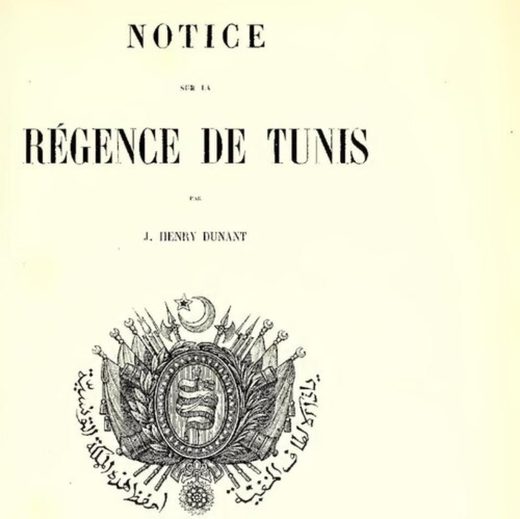
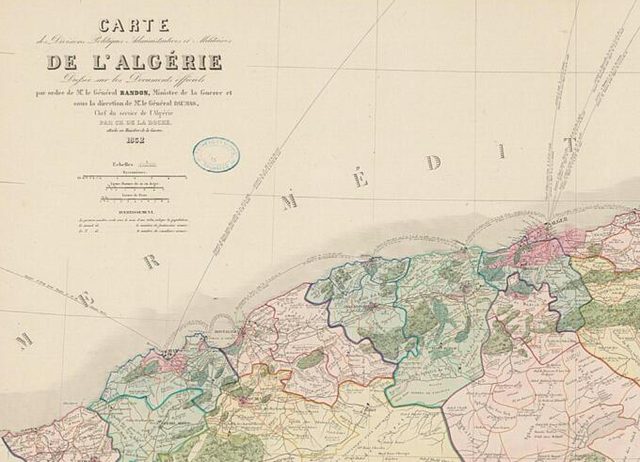
In the record, spring 1859Dunant’s first publication: Notice sur la Régence de Tunis, Geneva, 1858.French-ruled Algeria, mapped by province in 1852. Bibliothèque nationale de France.
The verbs mark each session’s emphasis. Throughout, you write down what you expect to find next, and the next session’s material tests it. Open a session for its material, what you examine and what challenges the reading.
01EstablishWhat does a life hold?What can the evidence support?13 or 17 January
The material
Documented historical evidenceDunant in spring 1859, his papers and public records.
Fictional caseJohn Dashwood’s stepmother and half-sisters, from Austen’s Sense and Sensibility.
What you examine
What a record documents, what it lets you infer and what it cannot show.
Whose perspective the archive leaves out, here the Algerians whose land and water the concession concerned.
What challenges the reading
A later historian’s interpretation of the period. You examine what it changes, which evidence supports it, and whose perspectives remain absent from the record.
02ExplainHow does wealth move?What relationships can we reasonably explain?27 or 31 January
The material
Documented historical evidenceDunant’s next period.
Fictional caseRuth, shared by the 3 Foundational Courses, weighing ways to provide for the years ahead.
What you examine
Whether capacities that change together are linked, and in which direction.
Where a gain rested on other people’s money, work or trust.
In Ruth’s case, the line between what the case states and what you project from it.
What challenges the reading
The documents of the period your earlier expectation was about.
03TraceWhat does time change?When do sequence and timing change possibilities?17 or 21 February
The material
Documented historical evidenceDunant’s next period.
Illustrative model2 lives that meet the same 2 events in a different order.
What you examine
How recovery, thresholds and irreversible changes operate within the model.
Which of those conditions could be established from evidence about a real life.
What challenges the reading
A change to 1 rule of the model, which changes its ending. Then the documents of Dunant’s period.
04WeighWhat can wealth not replace?What are the limits of substitution, and who decides?3 or 7 March
The material
Documented historical evidenceDunant’s next period.
Fictional caseThe Dashwood women again.
Demonstration Wealth ReadA living person’s account of their own life, unconnected to Dunant.
What you examine
The difference between comparing 2 goods and exchanging one for the other; goods that resist any common measure.
A capacity lost, set beside one spent knowingly for something valued more.
Whose judgement a valuation needs.
What challenges the reading
A different source of knowledge: a person’s account of their own life. You examine what such an account makes visible, what stays uncertain, and how it differs from reading someone else’s records.
05IntegrateHow do we read a whole life?What reading can we defend, including where it must remain open?17 or 21 March
The material
Documented historical evidenceThe last period.
Your own recordThe expectations and interpretations you wrote down before each release of documents: evidence of your reasoning, not of the life.
What you examine
Which expectations held, which failed and which could never be decided.
Hindsight in your own reading.
A reading of the whole life that keeps its conclusions, uncertainties and remaining questions apart.
What challenges the reading
Knowing how the life ended: what it should change in your reading, and what it should not.
Dates: Wednesday group, then Sunday group.
After session 05 you read a second documented life on your own. Chapter 04 shows what that reading is designed to demonstrate.
See what wealth makes possible, what it draws on, and what it is used for.
A rise in income, a rare opportunity, a year spent caring for someone or a decision to begin again can change more than one part of a life.
What appears to be a gain may depend on capacities that are already stretched. What looks like a loss may be a deliberate use of something valuable. Through the 9 Life Capitals, you learn to examine more of what is happening, and what the evidence lets you understand.
01
Distinguish what someone has from what they can actually do.
Money, knowledge, relationships and opportunities may all be present in a person’s life. What someone holds does not always show what they are able to do with it. A shortage of money can directly limit someone’s possibilities, even when they have considerable strengths elsewhere in life.
You learn to recognise the capacities that make different possibilities available, including those that financial measures cannot show.
02
Recognise what a gain depends on, and what it may demand elsewhere.
A new opportunity may build financial and intellectual capacities while drawing on time and energy. An individual achievement may rest on other people’s care, work or trust.
You learn to trace these relationships: where one form of wealth enables, sustains or constrains another, and where the evidence leaves the link uncertain.
03
Understand why the order of a life matters.
The same opportunities and commitments can lead to different places depending on when they arrive, what came before and what remains available.
You learn to examine how capacities develop, are used, recover or become harder to restore, and how timing changes the possibilities that follow.
04
Understand what is being gained, given up or put to use.
A fall in financial wealth may be an unavoidable loss, a necessary commitment or a deliberate expenditure for something a person values. These differ, and the cost is real in each case.
You learn to examine what one form of wealth can and cannot replace, whose choice it is to make, and when the evidence is insufficient to establish what a gain or loss meant.
Your independent work
Show what you can see.
At the end of the course you meet a documented life you have not studied before.
An unfamiliar documented life
The final brief: a written reading in 2 stages
Individual written faculty feedback
You examine which forms of wealth were present, how they depended on one another, what changed through time and what the evidence lets you conclude. You are asked to explain and defend your reading, identify what remains uncertain, and show what could change your conclusions.
A life unfolds. So does your understanding of its wealth.
Imagine trying to understand someone’s wealth without knowing what happens to them next.
What capacities were available to them?
What possibilities did those capacities create?
What depended on other people?
What was being developed, used or put at risk?
In this course you follow Henry Dunant’s life through evidence introduced in stages. You examine what the record supports, consider what may follow, and return to your earlier interpretation as further documents arrive.
You also learn to ask of every document when it was produced, by whom, and whose perspective it leaves out. A letter written that week, a memoir written decades later and a historian’s account are 3 different kinds of knowledge.
Your own developing judgement becomes part of what you study.
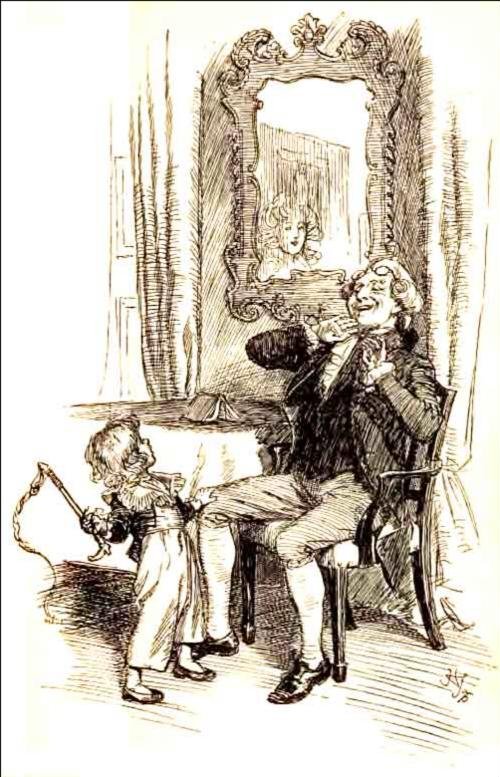
“His son’s son, a child of four years old.” In chapter 1, Norland’s old owner, charmed by John’s small son, secures the estate to John and the boy, so John’s father cannot use it to provide for his wife and daughters. Hugh Thomson, 1896.
A reading before and afterIllustrative · fictional case
Jane Austen · Sense and Sensibility · John Dashwood’s promise
Beforeafter chapter 1
What the story establishes
John promises his dying father that he will help his widow and daughters. He first considers giving his sisters substantial financial gifts.
What I expect
He will provide at least some money to his sisters.
What I am assuming
His first financial intention will survive competing family demands.
Afterchapters 2 to 5
What the text reveals
His conversation with Fanny moves him away from financial gifts. By the time the Dashwood women leave Norland, he has given them no money.
What changes in my reading
His first intention was a poor guide to what he did. I had underestimated the effect of family influence on how he exercised his financial capacity.
What remains open
What would John have done without Fanny’s intervention?
Events established within a fictional narrative, set out in the ledger’s logic.
The ledger is 1 page per session. It keeps your expectation and the assumption behind it, so that when the next evidence arrives you can see what held, what failed and why. Getting the outcome right is only part of the story. What matters is whether your reasoning was sound, what you assumed, and what you learned when the next evidence arrived. If you already know parts of Dunant’s later life, you write that down, and session 05 examines what it did to your reading.
ReadThe records of one period. You use the 9 Life Capitals to ask what was available, how capacities related, and which parts of the life stay unseen.
ExpectWhat you think may happen next, and what leads you to it. The ledger keeps the assumption behind your reading.
EncounterNew material arrives. Some expectations are supported, some challenged, and sometimes the record settles nothing.
ReconsiderYou return to what you wrote and examine what changed in the evidence, what changed in your interpretation, and what stays open.
What happens in a learning week
Before the session
A short pre-read introduces the concept and the material. You arrive with a first reading and questions.
In the live session · 90 minutes · up to 12 people
You examine the next evidence, learn 1 concept, discuss competing readings, and test the first reading against a related case, source or model. Different readers notice different dependencies, draw different conclusions, or challenge a link that looked convincing.
Between sessions
Guided work gives you another opportunity to apply the method; the activities vary, and your ledger carries the inquiry from one session to the next. You can also take the session’s question privately to your own circumstances.
What makes a reading sound
The same 5 standards guide the discussions and the written feedback on your final brief.
Evidence
What can the record establish, and what remains an inference?
Interdependence
How do capacities affect one another, and what supports the proposed link?
Time
What changes because of sequence, timing or an irreversible step?
Authority
Whose choices, values and constraints are being interpreted?
Openness
What needs reconsidering, and what evidence would change the conclusion?
A reasoned decision to withhold a conclusion, naming the missing evidence, can meet the highest standard. Your work is examined against these 5 standards. Your personal life choices are not assessed. The course gives no total wealth score and ranks no lives.
5 evenings or afternoons, January to March, in a room of 12.
The class brings together people with different relationships to wealth, work, family and responsibility. Everyone studies the same material, and no previous knowledge of finance or of the 9 Life Capitals is assumed.
Choose your group
2 groups of up to 12. You choose one when you join.
AOpening assembly, Saturday 9 January · closing assembly, Thursday 25 March · 15:00–16:00 Geneva
1–5Working sessions, Wednesdays 18:00–19:30 Geneva: 13 Jan · 27 Jan · 17 Feb · 3 Mar · 17 Mar
BFinal brief by 31 March
FWritten feedback by 14 April
Fortnightly, with a 3-week interval in February.
In addition to the 5 sessions, both groups attend an opening assembly on Saturday 9 January and a closing assembly on Thursday 25 March, both 15:00–16:00 Geneva, with the School’s 2 other Foundational Courses, on Zoom. Attendance is expected.
You join one group and stay with it. If illness, travel or a family commitment makes a date impossible, joining the other group for that session may be possible, subject to places.
Choose your class
The course runs twice in 2027. Both classes work through the same 5 sessions, cases and assessment, in a Wednesday or a Sunday group.
Founding Cohort · January 2027
Wednesday group18:00–19:30 Geneva13 January · 27 January · 17 February · 3 March · 17 March
Session dates, Wednesday group, Founding Cohort · January 2027
Opening and closing assemblies15:00–16:00 GenevaSaturday 9 January · Thursday 25 March 2027
Opening assembly: 9 January 2027. Closing assembly: 25 March 2027. These are shared with the School’s other 2 Foundational Courses and are additional to the 5 working sessions.
Times in London, New York and Abu Dhabi
Session times by city, Founding Cohort · January 2027
Location
Wednesday
Sunday
Geneva
18:00–19:30
13:00–14:30
London
17:00–18:30
12:00–13:30
New York · sessions 01–04
12:00–13:30
07:00–08:30
New York · session 05
13:00–14:30
08:00–09:30
Abu Dhabi
21:00–22:30
16:00–17:30
New York times change in March because the United States moves its clocks forward before Europe does.
May Class 2027
Wednesday group18:00–19:30 Geneva28 April · 12 May · 26 May · 9 June · 23 June
Session dates, Wednesday group, May Class 2027
01 · Establish
28 April
02 · Explain
12 May
03 · Trace
26 May
04 · Weigh
9 June
05 · Integrate
23 June
Sunday group13:00–14:30 GenevaWednesday 28 April · 23 May · 30 May · 13 June · 27 JuneMoved: session 01 to Wednesday 28 April, session 02 to Sunday 23 May
Session dates, Sunday group, May Class 2027
01 · Establish
Wednesday 28 April
02 · Explain
23 May
03 · Trace
30 May
04 · Weigh
13 June
05 · Integrate
27 June
Opening and closing assemblies15:00–16:00 GenevaSaturday 24 April · Thursday 1 July 2027
Opening assembly: 24 April 2027. Closing assembly: 1 July 2027. These are shared with the School’s other 2 Foundational Courses and are additional to the 5 working sessions.
Times in London, New York and Abu Dhabi
Session times by city, May Class 2027
Location
Wednesday
Sunday
Geneva
18:00–19:30
13:00–14:30
London
17:00–18:30
12:00–13:30
New York
12:00–13:30
07:00–08:30
Abu Dhabi
20:00–21:30
15:00–16:30
The commitment
About 16 to 19 hours of core study, plus 2 assemblies of 1 hour
7.5 h2 h3 h5 h
7.5 hours live5 sessions of 90 minutes
About 2 hours of pre-reads20 to 30 minutes before each session, on a phone
About 3 hours of guided work3 modules of 45 to 60 minutes after sessions 01 to 03
About 5 hours for the final briefafter session 05, in 2 stages
In the sessions you read the documents, work the evidence in pairs and take a position before the next evidence arrives. Between sessions you write 1 page on your ledger. Chapter 05 shows how a week runs; chapter 04 shows what the final brief asks.
What is included
5 live working sessions of 90 minutes, in a group of up to 12
A pre-read before each session, and 3 guided modules
Written faculty feedback on your final brief
Weekly faculty check-ins in the course’s group channel during the course
A list to read, watch and listen to for each session
Lifetime access to the School’s 2 curated learning libraries: yours and your cohort’s
The opening and closing assemblies with the other 2 Foundational Courses
3 optional, course-timed Snapshot Wealth Reads, free to everyone, and 1 Extended Reading, reviewed and signed by Ryna Mi
Your Wealth Reads
Across the course you are invited to take the free Snapshot Wealth Read 3 times: before the first session, after the third, and after the fifth.
Each time, you return to the same 9 Life Capitals with a developing understanding. If your answers change, the first question is why. Has something changed in your life, or are you seeing it differently?
Your tuition also includes 1 Extended Reading: a fuller interpretation of a Snapshot you choose to share confidentially, reviewed and signed by Ryna Mi. You can request it after session 03 or after session 05, and it is delivered within 6 weeks of your complete submission. The information required is made clear before you submit your Reading.
All 3 Snapshots are optional. None is assessed or discussed in class. The Extended Reading is also optional, and only the information you deliberately submit for it reaches Ryna Mi, under the stated privacy arrangements.
CHF 1,0002 instalments available · Fellowships available
If the price stands between you and the class, write to us through the School’s contact form before you join.
First-session guarantee. Tell us within 48 hours of the end of your first working session and you receive a full refund. Sponsoring another learner is a separate, voluntary option and never replaces the refund.
Language
The sessions, readings and your brief are in English.
Participation
You come prepared, take a position in the room, and write between sessions.
Confidentiality
Sessions are not recorded. Participants are expected to respect the confidentiality of others’ contributions, and personal financial or family circumstances need not be disclosed.
Open to anyone aged 18 or over. Your details and payment, in one step. You choose your group when you join; places are confirmed in order of joining, up to 12 per group. Enrolment closes on 8 January 2027. If your group is full, we offer you the other group or the next class, in April.
A worthwhile course begins with a question you want to pursue. This may be yours; another may suit what you need now.
5 questions · open any
What do I need to know beforehand?
You need no previous study of history, philosophy or finance. You do need to read closely, discuss what the evidence supports and complete short written work between sessions. The concepts and method are introduced as you work through the course.
Why study someone else’s life rather than my own?
Studying another person’s life gives everyone a shared record to examine, question and challenge, without requiring anyone to disclose their own circumstances. The record is incomplete, and learning to recognise what is missing is part of the inquiry. You can bring the questions to your own life privately.
What if I already know how Dunant’s life ended?
You write it down. Declaring prior knowledge is part of the method, and session 05 examines what knowing the ending did to your reading. The independent final brief introduces a documented life not previously studied in the course, so knowing Dunant’s story does not determine that reading.
Will I have to share my own circumstances?
There are 3 boundaries. Your own-life page is private: it is never submitted or assessed. Your Snapshot Wealth Reads are handled under the Read’s own privacy arrangements and are never used for classroom assessment; in the room, nobody is required to disclose their circumstances, and confidentiality is expected of everyone. The Extended Reading included in tuition uses only the information you deliberately share with Ryna Mi, who reviews and signs it, under arrangements explained to you beforehand.
Are the 9 Life Capitals established science?
They are the School’s proposed framework, published as Existential Portfolio Theory and taught as a theory to examine. The framework is open to reasoned challenge. In the course you learn to examine its claims against evidence, including where the framework may not adequately explain what the record shows. A well-supported challenge is part of serious inquiry; the same standards of reasoning apply to everyone.
1 situation · 3 educational questions
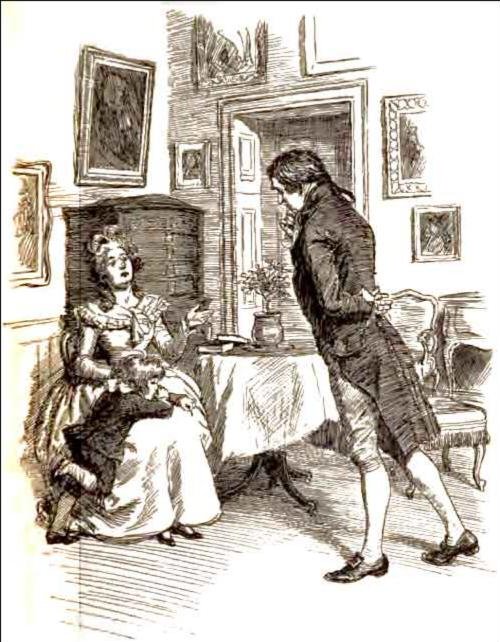
“I cannot imagine how they will spend half of it.” Fanny to John, chapter 2. Hugh Thomson, 1896.
In Austen’s Sense and Sensibility, John Dashwood promises his dying father to help his stepmother and 3 half-sisters. In 1 conversation with his wife, the help he intends shrinks from £3,000 to an annuity, then to presents in season.
The 3 Foundational Courses share an approach to learning: evidence, competing readings and a position you can defend. Each studies a different question, each stands alone, and 1 course is complete in itself. The order here is editorial, not a sequence to follow.
Money in Life Decisions
£3,000, an annuity, or presents in season: what changes with each?
The financial consequences of different arrangements.
The 3 courses share this case. All 3 run between a shared opening assembly on 9 January and a closing assembly on 25 March 2027, where the 3 classes meet.
 Ryna Mi