Wealth in Family Life
A parent helps one child buy a home. Another gives years of care. Someone keeps the family business going. Each may understand what was given, and what is now expected, differently.
This course invites you to look at family life through the 9 Life Capitals: what people contribute, what they receive, what they depend upon, and how decisions made by one person can shape the lives of others.
Over 5 live sessions, you’ll investigate fictional and literary families, build a Family Wealth Map, and practise reaching judgements that the evidence can support.
 Ryna MiFounder, The Wealth School · Former private‑banking CEO · Creator of Existential Portfolio Theory
Who decides what the father’s promise meant?
A father asks his son to look after the rest of the family. The son agrees. But what, exactly, has he promised? The situation comes from Jane Austen’s Sense and Sensibility. It opens the School’s 3 Foundational Courses, each of which asks something different of it.
Here, we ask what families give one another, how expectations arise, what becomes an obligation, and who has the right to decide.
Different families. Familiar questions.
You may recognise one of these situations, or perhaps something entirely different.
We study the same families. Your own stays private.
Everyone works with fictional and literary families provided by the School.
You can use what you learn to reflect on your own circumstances, but you won’t be asked to disclose, document or analyse your family for assessment.
A gift, a loan, a place to live
A parent helps one child with a home and wants to be fair to the other. A grandparent offers to pay for studies, on one condition.
What is being given, and what is being asked in return?
Care, time and money, given differently
One sister lives nearer and does more of the caring. Her brother contributes money from far away.
What counts as a contribution, and who decides?
Rules, customs and decisions made before you arrived
You become part of a family that already has its ways of making decisions. Some are written down. Others have simply been followed for years.
Which expectations did anyone actually agree to?
Other good ways to learn
Other schools, universities and practitioners teach different parts of family wealth and family life. Here is an overview of what is available, grouped by the questions this course works on. The programmes serve different audiences and purposes, and each is worth knowing whether or not you study with us. Each group also includes a book or report for those who would rather read.
This course stands within a long tradition of thinking about family wealth, including the work of James E. Hughes Jr., Susan Massenzio, Keith Whitaker and Dennis Jaffe, and adds its own reading through the 9 Life Capitals.
Or begin with the course itself: chapter 02, Two refusals →
4 questions families face
Select a programme or reading to see it.
Every family holds more wealth than its accounts show.
Wealth in Family Life examines what people in a family give, receive, expect and decide. Through fictional and literary families, you’ll learn to see contributions, dependencies and obligations, and the limits of what the evidence can tell us.
No family business or minimum financial assets required.
Selected by Ryna Mi · resource information reviewed November 2026 · images and covers from the providers’ and publishers’ own sites · availability, dates and fees may change · More programmes, books and research → The Library · Where to Learn
Two refusals. What makes them different?
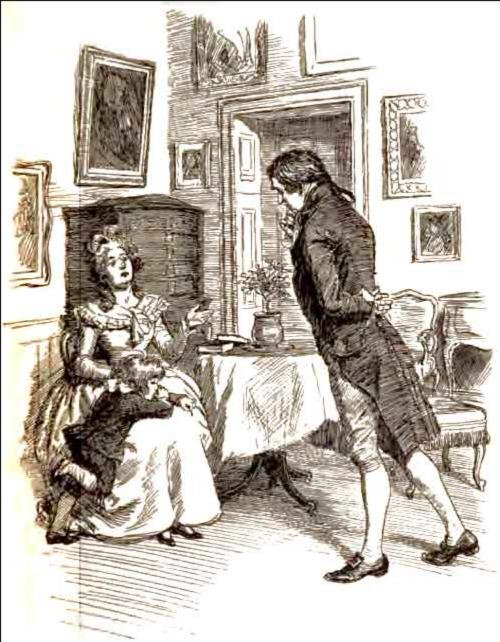
John Dashwood has promised his dying father that he will provide for his stepmother and 3 half-sisters.
He initially considers giving them £3,000. In a conversation with his wife, that becomes a smaller sum, then an annual payment, and finally occasional presents of fish and game.
The 4 women are in the same house. Nobody asks them.
Elsewhere in the novel, 2 men refuse conditions attached to family money. Both lose financial support. How much else do their decisions have in common?
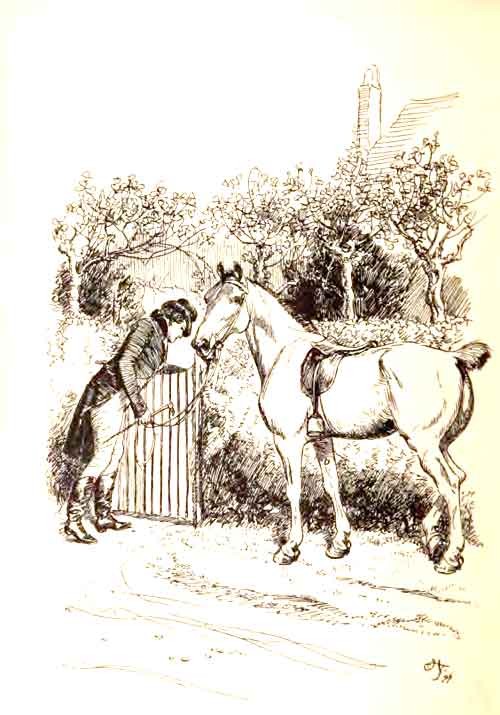
Edward Ferrars
Edward has been secretly engaged to Lucy Steele for 4 years. Lucy has no fortune.
When his mother discovers the engagement, she offers him an estate worth £1,000 a year if he gives Lucy up and marries a wealthy woman of her choosing.
Edward refuses. He has given his word.
His mother settles her fortune on his younger brother and threatens to prevent him from pursuing a profession.
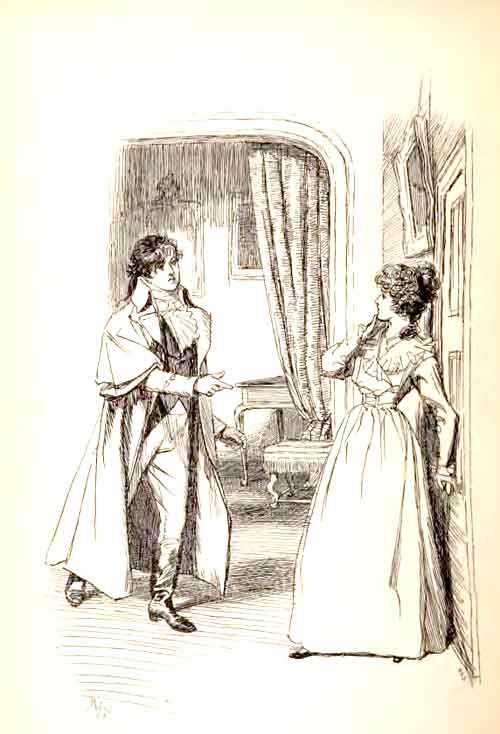
John Willoughby
Willoughby is in debt and expects to inherit from an elderly cousin, Mrs Smith.
She discovers that he seduced and abandoned a young woman, Eliza Williams. Mrs Smith offers to forgive him if he marries Eliza.
Willoughby refuses.
Mrs Smith withdraws her support, and he marries a wealthy heiress for her fortune.
Was either man right to refuse? What makes you think so?
You may defend Edward, Willoughby, both or neither. Keep your first answer in mind. Nothing you write or think here is recorded or sent.
1 · Who tells us?
2 · What exactly did each man refuse?
3 · What else could each have done?
4 · Whose voice is missing?
You now have more to weigh: a promise and a harm, what each man depended on, what refusing cost him, who tells the story and whose account we never hear.
The evidence cannot make the judgement for you.
Your view may have changed, or not. What matters is whether you can now explain what supports it, and what you still don't know.
Source: Jane Austen, Sense and Sensibility, chapters 37 and 44. The account includes seduction and abandonment without graphic detail.
A parent offers to help you buy a flat, if you live closer.
A brother has kept the family shop running for years.
Your partner's parents offer financial help, on conditions.
Everyone assumes that the person who lives nearest will care for an ageing parent.
Before reaching a conclusion, we return to 4 questions.
- What have we established?
- What remains uncertain?
- Which assumptions matter?
- Whose decision is this?
It doesn't remove disagreement or tell you what to think. It helps you take the evidence as far as it can go, and recognise where it stops. Every working session ends here.
The Dashwood promise opens all 3 Foundational Courses. Each asks a different question of it.
One family, seen through the 9 Life Capitals as the evidence grows.
You meet a family through a letter. At first, you know only what the letter says. As the course continues, other voices enter.
You discover the conditions behind a gift, the work that kept the family's livelihood going, and decisions made long before the present situation. Some new information may change your reading. Other information may confirm it.
Alongside this work, you read short passages from Jane Austen. Each session asks you to do more of the questioning for yourself.
How do the many forms of wealth shape what family members make possible for one another, what they expect of one another, and what each is responsible for?
The family you follow together
A mother, her 2 adult children and the people around them. Their story unfolds through letters, records, decisions and different accounts of the same events.
The family you investigate independently
A second fictional family appears in your work between sessions. You begin with guidance; as the course progresses, you decide more of the investigation for yourself.
The family the School did not write
Austen's characters, narrator and the institutions of their time may support, complicate or challenge the School's own ideas.
See what exists, what connects people, and what changes.
A family's financial assets are only part of its wealth. There may also be years of care, knowledge built together, relationships, skills, opportunities and responsibilities that are not reflected in an account or ownership document.
The map helps you examine these forms of wealth through the 9 Life Capitals. You begin with what the evidence establishes. As new information appears, you revisit it:
- who contributes and who receives
- who depends upon what
- how a decision affecting one person may affect others
- what remains uncertain
The map is not a measure of how wealthy the family is, a judgement of its members or a diagnosis of its relationships. It is a way of seeing more of the situation.
By the final session, you'll have a map that you have built, questioned and revised yourself.
What exactly was promised?
A mother offers her 2 adult children the same gift. We examine her letter: what it says, what each person may understand from it, and what we cannot yet know.
Your Family Wealth Map: Begin with what the first records establish, without filling the gaps with assumptions.
Between sessions: A father lends one son money for a business.
- The mother's letter
- John Dashwood's promise
What does a gift make possible, and what does it restrict?
The family's gift comes with conditions. We examine what those conditions make possible, what they restrict, and how differently they may affect the people involved.
Your Family Wealth Map: Look across the 9 Life Capitals: a financial benefit may affect someone's time, choices, relationships or independence.
Between sessions: 3 years later, the loan is unpaid and the father needs care.
- The mother's letter
- The conditions attached to the gift
Who keeps things going? Who gets to decide?
Some contributions appear in financial accounts. Others take the form of care, time, knowledge, skill or work that nobody recorded. We examine who sustained the family's life and livelihood, and who has a say in what happens next.
Your Family Wealth Map: Add contributions, dependencies and decision-making authority.
Between sessions: How a holiday home came to be shared.
- The mother's letter
- The conditions
- What each person contributed: care, time, knowledge, work
- 2 people whose generosity raises questions about help, independence and influence
Where did these expectations come from?
An old decision may explain a present expectation. A contribution that was overlooked may become visible. Something remembered as an obligation may look different when its history is examined.
Your Family Wealth Map: Trace how contributions, agreements and expectations developed, and where the evidence leaves room for different readings.
Between sessions: You decide what you still need to investigate, and why.
- The mother's letter
- The conditions
- Contributions
- 30 years of family records
- Edward Ferrars's account of how his engagement began
What happens when legitimate claims compete?
One family member wants to step out of an arrangement. Another proposes a decision that could bind the next generation. We examine the grounds of the different claims, and which choices remain with each person.
Your Family Wealth Map: Bring everything together. Identify what the map shows, and what it still cannot tell you.
After the final session: An independent written investigation of a family you have not studied before.
- The mother's letter
- The conditions
- Contributions
- 30 years of records
- 2 competing proposals
- Edward and Willoughby, revisited
Final investigation due 3 April 2027. Individual written feedback by 17 April 2027.
See more of the wealth a family creates, shares and depends upon.
A family may share money, a home, time, knowledge, care, opportunities and responsibilities. Some contributions are obvious. Others may hardly be recognised. Through the 9 Life Capitals, you'll practise examining these forms of wealth together, and seeing how an arrangement that helps one person may affect another.
Tell what you know from what you assume.
A letter may state how much money is being offered without saying what the giver expects in return. You learn to distinguish what a record establishes from what someone has inferred.
See one decision from several positions.
What helps one person may restrict another. The same gift may offer financial security to one family member while creating expectations or affecting the choices of others. You examine what changes for each person, across different forms of wealth.
Recognise contributions that are easy to overlook.
Who provided care, time, knowledge, skill or unpaid work? Who benefited? Who depended on those contributions? And who had the authority to decide how they would be recognised? You learn to see more of what sustains a family's wealth than its financial records alone can show.
Understand how expectations take hold.
A decision made years ago can become a family practice, then something people treat as an obligation. You practise tracing that history while recognising that people may remember it differently and that some evidence may be missing.
Make a judgement without claiming to decide for others.
Several people may have claims with genuine grounds behind them, even when those claims cannot all be met. You practise explaining what can be concluded, what remains uncertain, and who has the authority to decide.
Your Family Wealth Map
Across the 5 sessions, you construct and revise a visual map of the principal fictional family through the 9 Life Capitals. You keep it as a record of your learning. It is not a wealth score, a diagnosis or a separate assessed assignment.
Your independent investigation
At the end of the course, you receive the story and records of a new fictional family. You investigate what has been agreed, what has come to be expected, which forms of wealth are involved, and what the evidence supports, and you receive individual faculty feedback.
Your own family, privately
You may find yourself thinking differently about situations in your own family. Those reflections belong to you. Nothing about your own family is collected or assessed.
Evidence we wrote, beside evidence we did not.
The School has created fictional families for you to investigate. Jane Austen's family is different: we cannot change what she wrote to make our interpretation look right.
When you move between these sources, Austen may confirm something you thought, complicate it or make you reconsider it. You are not expected to change your mind for the sake of changing it. You are expected to have reasons for keeping a judgement, or for revising it.
Your own developing judgement becomes part of what you study.
There are no more than 12 participants in a group. Everyone works with the same evidence, but you may not read it in the same way. In the live sessions, you compare interpretations, explain what supports yours, and consider what someone else has noticed that you may have missed. The faculty leads the discussion and reviews your final independent investigation individually.
What happens in a learning weekRead
The next part of the family's story and, when set, a short passage from Austen.
Examine and compare
New evidence, other people's readings, and your Family Wealth Map, developed or revised. Each 90-minute session ends with the Third Position.
Investigate alone
The second fictional family. At first with considerable guidance; with each investigation, you decide more for yourself.
Resources you have selected and collected during your studies.
Resources gathered and curated through your cohort's learning.
Both stay open to you for life. Ongoing curation, faculty support and chat access after the course are offered on separate terms.
How we look at your workYour final investigation shows how you examine a family situation, including the limits of what can be known.
A careful decision to withhold a conclusion can be well supported, particularly when you explain what evidence is missing and why it matters. Your reasoning is assessed. Your family is not.
5 live online sessions, January to March.
Choose the group that suits your schedule. Both follow the same course and meet for 2 shared assemblies with the School's other Foundational Courses. No previous knowledge of finance, literature or the 9 Life Capitals is required.
London 17:00 · New York 12:00 (13:00 on 16 March) · Abu Dhabi 21:00
London 10:30 · New York 05:30 (06:30 on 20 March) · Abu Dhabi 14:30
If your group is full, we offer you the other group or the May Class 2027. A move between groups is possible as an exception, for a real reason.
Attendance is expected.
After the live programme- 5 live working sessions of 90 minutes: 7.5 hours
- 2 shared assemblies of 1 hour: 2 hours
- Short readings before sessions, including about 2,300 words of Austen across the course
- A developing Family Wealth Map, built within the sessions
- 4 independent investigations of a second fictional family and 4 short reflection notes
- A final independent written investigation
The time needed for independent reading and writing will be confirmed when the teaching materials are finalised.
- 5 live faculty-led working sessions in a group of up to 12
- Readings and guided work between sessions
- A Family Wealth Map developed and revised throughout
- Individual written faculty feedback on your final investigation
- A group channel between sessions and weekly faculty check-ins
- Lifetime access to your personal and cohort libraries
- Opening and closing assemblies with the other Foundational Courses
This is an education in how wealth works between people in family life. It is not family therapy, mediation or dispute resolution. It does not provide legal, tax or financial advice.
Instalments and fellowships available. If tuition would prevent you from joining, contact the School about a fellowship before enrolling.
First-session guarantee. If the course is not right for you, tell us within 48 hours of the end of the first working session and we will refund your tuition in full. If you prefer, you can give your place to someone else or sponsor another learner instead.
If you miss a session. You receive all the session's material. If you miss it for a real reason, such as illness, travel or a family matter, faculty offer voice notes and a short catch-up check-in.
Choose your group and complete your details and payment in one step.
CHF 1,000 · up to 12 participants per group · instalments and fellowships available. Enrolment closes 8 January 2027; places are confirmed in the order of joining.
Is this the question you want to study?
A worthwhile course begins with a question you want to pursue. This may be yours. Another may suit what you need now.
Do I need significant wealth or a family business?
No. The course concerns financial wealth, but also care, time, work, knowledge, relationships and the other forms of wealth described by the 9 Life Capitals. Its questions can arise in an ordinary household as well as in a family with substantial financial assets.
Will I have to talk about my own family?
No. Everyone works with the same fictional and literary families. You can take part fully without discussing your own circumstances. Nothing about your family is collected or assessed.
What is a Family Wealth Map?
A way to examine how different forms of wealth are created, held, shared and sustained between people in a family. Using the 9 Life Capitals, you map contributions, dependencies, expectations and consequences as the evidence becomes available, and revise it as you learn more. It isn't a score, a psychological profile or a judgement about whether a family is wealthy or successful.
Will I make a map of my own family?
No. The map is built from the fictional family studied by everyone in the course. You are welcome to reflect privately on what the method brings to mind.
Is this family therapy or mediation?
No. It is an educational course in examining family situations through their arrangements, history, evidence and different forms of wealth. It doesn't provide therapy, mediation, legal advice or help resolving a particular family's dispute.
Why read a novel from 1811?
Because the School did not write it. Austen's characters, narrator and social world have their own perspectives, and we cannot change them to make our ideas look right. You don't need to have read Austen before; we work with short, introduced passages.
I'm a professional adviser to families. Is this for me?
It may be. The course doesn't train advisers or offer a professional qualification. It offers practice in examining family situations from several positions, including those not fully represented in financial or legal documents.
Open Classes
Live, question-led discussions open to anyone.
Sense and Sensibility
Read the novel online through Project Gutenberg, with Hugh Thomson's 1896 illustrations.
The 9 Life Capitals
The School's framework, through Wealth Across a Life and its source paper.
The Library · Where to Learn
Further books, programmes, research and practical resources.
John Dashwood promises his dying father that he will help his stepmother and 3 half-sisters. He begins by considering £3,000; after talking with his wife, his help shrinks to an annuity and then to presents in season. The 3 Foundational Courses begin here, and each examines it differently.
The financial mechanisms, alternatives, costs and consequences of a decision.
Explore Money in Life Decisions →How wealth across the 9 Life Capitals develops, interacts and changes through one lifetime.
Explore Wealth Across a Life →How wealth across the 9 Life Capitals is created, shared and sustained between people, and how expectations, contributions and authority shape what happens next.
The 3 courses share an opening assembly on 9 January and a closing assembly on 25 March 2027. Each course stands on its own.
If this is the question you want to study
Wealth in Family Life ·
Thank you. Your place is confirmed.
The confirmation is on its way to your email. If it has not arrived within a few minutes, please check your spam folder.
What happens next
- Your confirmation email, now
- Your Zoom details, before
- The opening assembly, , Geneva time
- Your first working session, , Geneva time
CHF 1,000 · up to 12 participants per group · instalments and fellowships available. Your details and payment, in one step. Choose your group when you join. Enrolment closes on 8 January 2027.